The short answer
For dinner service, book a solo pianist, guitarist, singer-guitarist, harpist or jazz duo playing at a level where guests can still talk. Encore's price guide lists solo pianists at £220 to £450 (average £258), singing guitarists at £230 to £500 (average £275) and jazz duos at £380 to £800 (average £512). In England and Wales, live music in alcohol-licensed premises between 8am and 11pm for 500 people or fewer needs no extra entertainment licence, but you need TheMusicLicence from PPL PRS.
Key takeaways
- Background dinner music works best from solo and duo acts: piano, guitar, harp, singer-guitarist or a jazz duo.
- Encore lists solo pianists at £220–£450, jazz duos at £380–£800 and jazz trios at £570–£1,200, across all event types.
- GOV.UK lists hotels, guesthouses, restaurants and cafes among businesses that usually need a licence to play live or recorded music in public.
- Live music in alcohol-licensed premises in England and Wales needs no extra entertainment licence between 8am and 11pm for up to 500 people.
- Brief musicians on volume, set times, breaks, dress and where to stand before they arrive.
For restaurants and hotels, the best live music during dinner comes from solo and duo acts: a pianist, guitarist, singer-guitarist, harpist or jazz duo, playing at a level where guests can still talk. Encore's price guide lists solo pianists at £220 to £450 and jazz duos at £380 to £800. In England and Wales you don't need extra entertainment licensing for live music in alcohol-licensed premises between 8am and 11pm for 500 people or fewer, but you do need TheMusicLicence from PPL PRS.
What live music works in a restaurant or hotel?
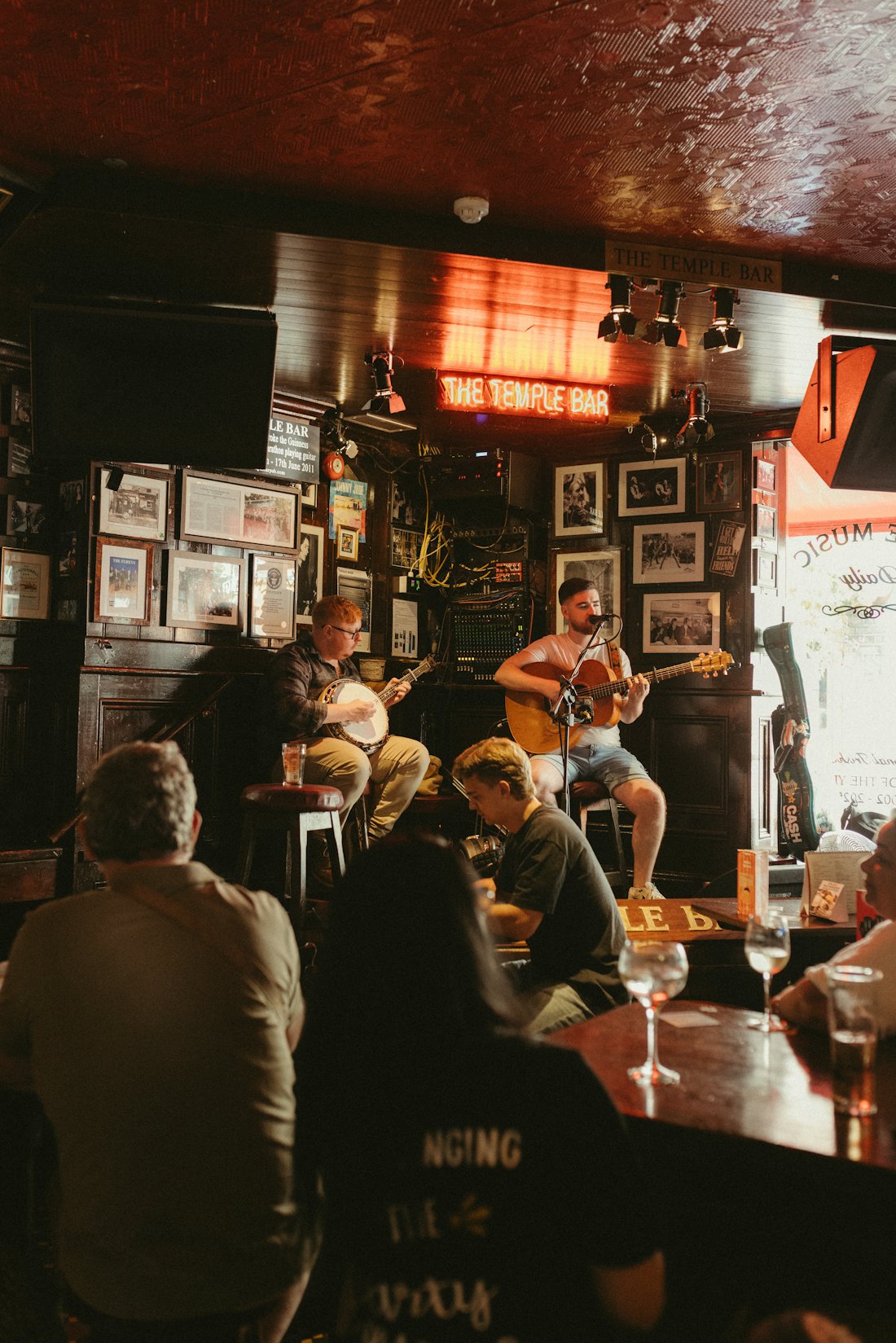
Dinner music has one job: make the room feel good without stopping conversation. That rules out most bands. It suits acts that can play quietly and keep a steady mood for two or three hours.
| Act | Best for | Notes |
|---|---|---|
| Solo pianist | Hotel lounges, fine dining, afternoon tea | Needs a piano or a good digital piano and space for it |
| Solo guitarist (instrumental) | Terraces, small dining rooms | Very small footprint; can play unamplified |
| Singer-guitarist | Bistros, gastropubs, Sunday lunch | Ask for a quieter "dinner set" |
| Harpist | Hotel restaurants, afternoon tea, receptions | Space for the harp and a careful load-in |
| Jazz duo (for example guitar and double bass) | Restaurants, cocktail bars | Fuller sound, still conversation-friendly |
| Jazz trio | Larger dining rooms, hotel bars | Needs more space; can lift the room later in the evening |
| Solo saxophonist | Drinks receptions, hotel bars | Can be loud; brief on volume |
| String duo or quartet | Receptions, special dinners, weddings | Mainly unamplified; classical and pop arrangements |
For weddings and private events in hotel function rooms, see our guides to drinks reception entertainment ideas and wedding ceremony music.
How much does background live music cost?
These figures come from Encore's price guide, checked November 2026. They cover all event types, including weddings and corporate events. Encore says its prices are for 2022, and the page was last updated in June 2024, so expect current quotes at or above these.
| Act | Starting | Average | High end |
|---|---|---|---|
| Solo pianist | £220 | £258 | £450 |
| Singing pianist | £250 | £302 | £500 |
| Solo guitarist | £190 | £254 | £400 |
| Singing guitarist | £230 | £275 | £500 |
| Harpist | £250 | £308 | £450 |
| Solo saxophonist | £200 | £226 | £500 |
| Jazz duo | £380 | £512 | £800 |
| Jazz trio | £570 | £768 | £1,200 |
| String duo | £350 | £390 | £650 |
| String quartet | £720 | £780 | £1,200 |
For a regular weekly dinner slot, some musicians will quote less than their one-off event price in exchange for steady work. The Musicians' Union recommended minimum for a casual function engagement of up to four hours is £222.88 per musician, and for pubs and clubs it is £167.16 per musician for up to three hours (May 2026 rates, reproduced by Last Minute Musicians). Our guide to what a solo singer or acoustic act costs covers the pub end of the market.
How loud should dinner music be?
Quiet enough that two people across a table can talk without leaning in. There is no single decibel figure for this, so judge it in the room:
- Do a soundcheck before service with a member of staff sitting at the nearest and furthest tables.
- Agree a hand signal so staff can ask for "down a bit" without interrupting.
- Leave a gap between the act and the nearest table, so no one is seated right beside a speaker.
- Point speakers along the room and away from diners' faces.
- Prefer unamplified for small rooms. Solo guitar, harp and strings often need no PA at all.
Your staff matter too. HSE says the Control of Noise at Work Regulations 2005 have applied to the music and entertainment sector since 6 April 2008, with action values at daily average exposures of 80 dB(A) and 85 dB(A) and a limit of 87 dB(A). If staff work beside a loud band in a function room all night, assess their exposure against those levels.
How long should musicians play during dinner?
Plan the sets around service. This is one way to split a three-hour dinner slot:
| Time | Set |
|---|---|
| 6.45pm | Musician arrives, sets up, soundchecks |
| 7.00pm–7.45pm | First set, as the first tables arrive |
| 7.45pm–8.00pm | Break |
| 8.00pm–8.45pm | Second set, through main courses |
| 8.45pm–9.00pm | Break |
| 9.00pm–9.45pm | Third set, through desserts and drinks |
Agree this in writing with the act, and ask what breaks they need. Ask for a playlist or background music to cover the breaks so the room doesn't go silent.
Do restaurants and hotels need a licence for live music?
Two separate licences are involved.
TheMusicLicence. GOV.UK lists hotels and guesthouses, and restaurants and cafes, among the businesses that usually need a licence to play live or recorded music in public. That licence is TheMusicLicence from PPL PRS, which covers the copyright in the music. See TheMusicLicence for pubs and live music for how pricing works.
The premises licence. GOV.UK guidance on the Live Music Act says:
- Live or recorded music needs no extra entertainment licence between 8am and 11pm in premises with an alcohol on-licence, for an audience of 500 or fewer.
- Unamplified live music needs no licence anywhere between 8am and 11pm.
- Amplified live music in a workplace needs no licence between 8am and 11pm for an audience of 500 or fewer. This can help a café or restaurant without an alcohol licence.
After 11pm, your premises licence must permit it. Check for conditions on music, such as volume limits or closed windows.
Private events. Under Schedule 1 of the Licensing Act 2003, entertainment counts as regulated entertainment if it is provided for the public, for members of a club, or in private for people who are charged with a view to profit. A private wedding in a hotel function room where guests are not charged for the entertainment usually falls outside that, but check with your licensing authority if you are unsure.
The Live Music Act extends to England and Wales only. Hotels and restaurants in Scotland and Northern Ireland should check with their council.
How to brief musicians for a dinner booking
Send the act this before the night:
- Arrival time, set times and finish time.
- Where they will play, with a photo of the spot and the nearest power socket.
- The room and the guests. A business crowd at a hotel bar wants something different from a family Sunday lunch.
- Volume level, and who on your staff they should listen to.
- Music brief. For example: jazz standards and acoustic covers, nothing with a big chorus, nothing too slow.
- Dress code.
- Parking, load-in and a place to leave cases.
- Food and drink. A staff meal and soft drinks during the booking is a decent gesture.
- Fee, payment method and timing.
Gigtown, launching in Shropshire first, connects hotels and restaurants with solo players, duos and string quartets. You see whether an act is free from their shared calendar and agree the fee directly, with no commission taken. For a full booking checklist, see how to book live music for your pub, which applies equally to dining rooms.
Frequently asked questions
Does a restaurant need a licence for a live musician?
It needs TheMusicLicence from PPL PRS for the copyright side. For the premises side, live music between 8am and 11pm for up to 500 people in a restaurant licensed to sell alcohol needs no extra entertainment licence in England and Wales.
What music works best during dinner?
Instrumental or quietly sung music with a steady tempo, such as jazz standards, acoustic covers or light classical. Avoid acts whose set is built to get people dancing.
Can a hotel have live music in the bar and a band at a wedding on the same night?
Yes, if your licence and noise conditions allow it and the two spaces are separated. Brief both acts on volume and set times so they don't clash.
How much does a string quartet cost for a hotel event?
Encore's price guide lists string quartets at £720 to £1,200, with an average of £780, across all event types. Wedding and December dates usually cost more.
Should dinner musicians eat at the restaurant?
Offering a staff meal is common courtesy for a three-hour booking. Agree it at booking so it isn't a surprise to the kitchen.
Sources
- Encore Musicians: How much does it cost to hire musicians, price guide (checked November 2026)
- Last Minute Musicians: MU recommended live rates (checked November 2026)
- GOV.UK: Get a licence to play live or recorded music (checked November 2026)
- GOV.UK: Entertainment licensing, changes under the Live Music Act (checked November 2026)
- legislation.gov.uk: Licensing Act 2003, Schedule 1, provision of regulated entertainment (checked November 2026)
- legislation.gov.uk: Live Music Act 2012 explanatory notes, territorial extent (checked November 2026)
- PPL PRS: TheMusicLicence for pubs and bars (checked November 2026)
- HSE: Control of Noise at Work Regulations 2005 (checked November 2026)
Sources checked 18 November 2026. This guide is general information, not legal, tax or financial advice.