The short answer
Open each set with a song the whole room recognises in the first few seconds, build energy through the set, group songs by tempo so the floor does not empty between them, and save your biggest singalongs for the end of the last set. For a pub night of two or three sets, plan 30–45 songs with spares, start the first set lighter while people eat and drink, and finish before the venue's cut-off time.
Key takeaways
- Start each set with a song everyone knows. Save deep cuts for later in the night.
- Build energy across each set and across the night. Peak at the end of the last set.
- Group songs in runs of similar tempo and avoid long gaps between them. Dead air empties dance floors.
- Plan spares for every set so you can read the room and swap songs on the night.
- The MU recommends at least 15 minutes' break per 2 hours of playing. Agree set lengths with the venue in advance.
- Covers are licensed by the venue through TheMusicLicence from PPL PRS. Your job is to play them well and finish on time.
A covers setlist that fills the floor starts with a song everyone knows, builds energy steadily through each set, keeps songs of similar tempo together so there are no dead spots, and saves the biggest singalongs for the end of the night. For a typical pub gig, plan 30–45 songs across two or three sets, carry spares, and finish on time. Your setlist is a plan, and the best covers acts change it on the night to suit the room.
How do you structure a covers setlist?
Think of the night as one long build, split into sets.
| Part of the night | What the room is doing | What to play |
|---|---|---|
| First set, opening | Arriving, ordering, eating | Familiar mid-tempo songs. Recognisable, not too loud |
| First set, end | Settled, a few drinks in | Lift the tempo. Test some upbeat singalongs |
| Second set, opening | Back from the bar, ready to dance | A strong, well-known opener to pull people forward |
| Second set, middle | Dancing | Runs of upbeat songs with similar tempo and feel |
| Last set, end | Peak of the night | Biggest singalongs and floor-fillers |
| Encore (if allowed) | Wanting one more | One song everyone knows. Short |
In a pub, the first set often plays to people eating. A pub consultancy guide from Orange Jelly reminds pubs to agree a volume level with acts at soundcheck and hold it. Starting lighter makes that easier, and gives you somewhere to build to.
What songs should open a set?
Open with a song people recognise within the first few seconds. A strong intro riff or drum beat tells the room the night has started.
Good openers have:
- An instantly recognisable start. Think of songs like "Mr. Brightside" by The Killers or "Superstition" by Stevie Wonder, where the intro gives it away.
- Mid-to-high tempo. Fast enough to lift the room, not so fast that you peak too early.
- A song you play brilliantly. Your opener sets expectations for the night. Pick something tight.
Avoid opening with a ballad, a deep cut or a song that needs a long count-in or a crowd that is already warmed up.
How do you keep a dance floor full?
- Group by tempo. Play runs of three to five songs at similar tempos so dancers do not have to reset.
- Cut the gaps. Count straight into the next song. Plan segues for songs in related keys.
- Limit the chat. A quick "thank you" and the next song name is enough. Save band introductions for a natural break.
- Use medleys. Short medleys keep energy up and let you cover more songs.
- Watch who is dancing. If the floor thins, switch to a spare that is a guaranteed singalong.
- Place slow songs on purpose. One slower song can give dancers a breather, but put a sure-fire floor-filler straight after it.
- Plan the peak. The last 15 minutes of the night should be your strongest material.
What does a sample pub setlist look like?
This is an illustrative structure for a four-piece rock and pop covers band playing 2 x 45 minutes. Swap in songs you play well.
| Slot | Example song (artist) | Purpose |
|---|---|---|
| Set 1 | ||
| 1 | "Dancing in the Moonlight" (Toploader) | Familiar, friendly opener |
| 2 | "Brown Eyed Girl" (Van Morrison) | Singalong, mid-tempo |
| 3 | "Valerie" (Mark Ronson and Amy Winehouse) | Lift the tempo |
| 4 | "Use Somebody" (Kings of Leon) | Bigger rock moment |
| 5–9 | Five mixed favourites | Test the room |
| 10 | "Fast Car" (Tracy Chapman) | Breather |
| 11–12 | Two upbeat songs | End the set on a lift |
| Set 2 | ||
| 1 | "Superstition" (Stevie Wonder) | Strong opener |
| 2–6 | Run of dance-floor songs at similar tempo | Fill the floor |
| 7 | "Wonderwall" (Oasis) | Pub singalong |
| 8–10 | Building run | Raise energy |
| 11 | "Don't Stop Me Now" (Queen) | Near-peak |
| 12 | "Mr. Brightside" (The Killers) | Finale |
| Spares | 4–6 songs | Swap in on the night |
How should a wedding setlist be different?
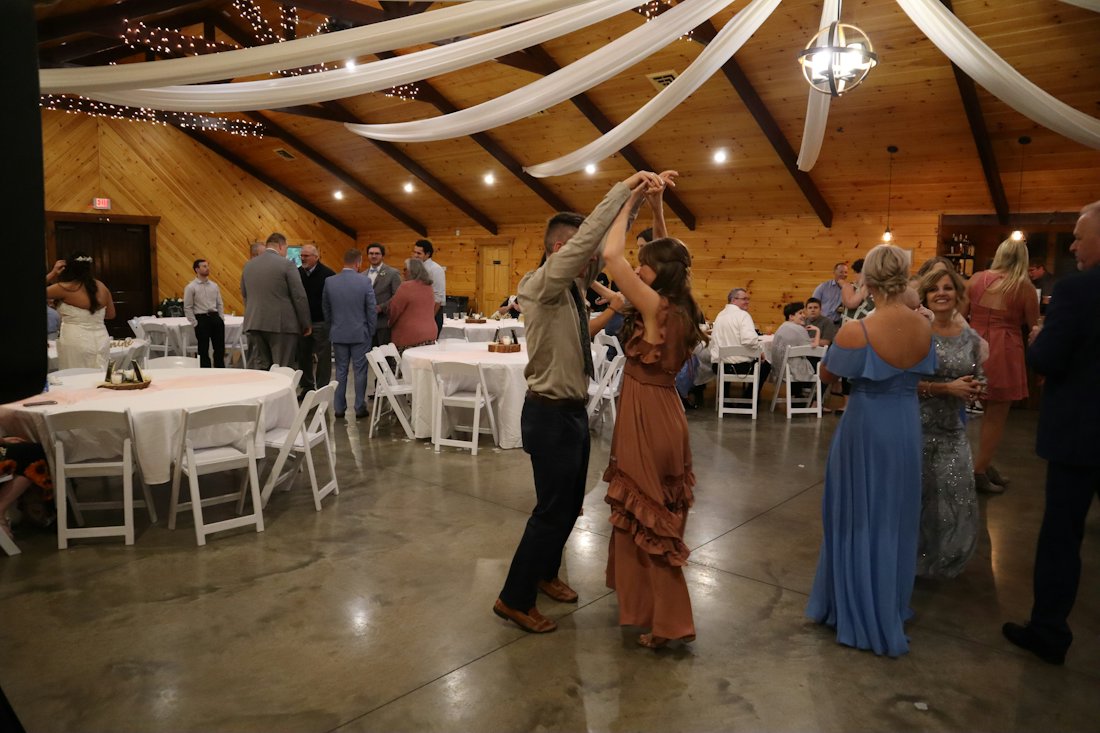
Weddings bring a wider age range and a fixed timetable, so the setlist needs to work for grandparents and university friends at once.
- Agree a must-play and do-not-play list with the couple weeks in advance.
- Plan around the first dance. If the first dance leads straight into a band set, follow it with a song that invites everyone onto the floor. See first dance with a live band.
- Cover several decades. Mix Motown, 70s and 80s pop, 90s Britpop and recent chart songs.
- Fit the timeline. Wedding sets are usually fixed around speeches, food and the evening buffet. Our wedding entertainment timeline shows a typical day.
- Respect sound limits. Some wedding venues have noise limiters. Choose songs that still work at a controlled volume.
For more on building a wedding act, see how to become a wedding act.
How many songs and how long should sets be?
| Gig format | Typical music time | Songs to prepare (including spares) |
|---|---|---|
| Pub, 2 x 45 minutes | 90 minutes | 28–32 |
| Pub, 3 x 40 minutes | 2 hours | 36–42 |
| Pub, up to 3 hours | 3 hours | 50–55 |
| Wedding, 2 x 60 minutes | 2 hours | 35–40 plus requests |
These are working estimates based on 3–4 minute songs. Count your own song lengths and build in spares.
The Musicians' Union's National Gig Rates recommend a break of at least 15 minutes per 2 hours of playing. Agree the exact set times with the venue before the gig, including when you must stop.
When do you have to finish playing?
The venue sets the finish time, so ask. In England and Wales, live music in an alcohol-licensed premises between 8am and 11pm, to an audience of up to 500, does not need an entertainment licence. After 11pm, the venue's premises licence must cover regulated entertainment. If a pub tells you to stop at 11pm, it may be a licensing condition, so stop. Late finishes can also cause noise complaints: see live music and noise complaints.
How do you test and improve your setlist?
- Write it down after every gig. Note which songs filled the floor and which emptied it.
- Drop songs that never work. However much you like playing them.
- Rotate for regular venues. Change part of the set so repeat customers hear something new.
- Add one or two new songs a month. Debut them mid-set, between proven songs.
- Ask the bar staff. They see the room from the other side and know what regulars want.
Who handles licensing for covers?
The venue does. TheMusicLicence from PPL PRS lets businesses play music, including live performances, for customers. You do not need your own licence to play covers at a licensed pub or wedding venue.
If you write and perform your own songs, it is worth joining a collecting society so you can be paid when they are performed.
A setlist people love is your best sales tool. Add a short song list to your booking profile so landlords and couples can see what you play. On Gigtown, venues and couples can enquire with you directly once they have seen your profile and availability. Our guide to getting pub gigs covers how to pitch with it.
Frequently asked questions
How many songs do I need for a three-hour pub gig?
Most covers songs run 3–4 minutes, so three hours of music needs roughly 45–55 songs including medleys and segues. Two 45-minute sets needs around 25–30. Always carry spares.
Should I play my own songs at a covers gig?
Yes, sparingly, once you have won the room. One or two originals in the middle of a set, between well-known songs, is usually safe.
How do I handle requests?
Take them if you know the song and it fits the moment. If not, say you will play something similar. For weddings, agree a must-play and a do-not-play list in advance.
Should I change my setlist for every gig?
Keep a core set that works and rotate 20–30% for regular venues so repeat customers hear something new.
Do I need a licence to play covers in a pub?
The venue needs the licences. Music use in a business, including live performance, is covered by TheMusicLicence from PPL PRS, and the pub's premises licence covers the entertainment.
Sources
- Musicians' Union: National Gig Rates, April 2026, breaks (checked November 2026)
- PPL PRS: What is TheMusicLicence (checked November 2026)
- GOV.UK: Entertainment licensing changes under the Live Music Act (checked November 2026)
- Orange Jelly: Live music events for pubs (checked November 2026)
Sources checked 18 November 2026. This guide is general information, not legal, tax or financial advice.